
Visiting Ephesus from Kuşadası: A Practical Guide
A thoughtful route through Ephesus for travellers and guides arriving from Kuşadası, with the stories behind its streets and practical ways to pace a visit.
Why Ephesus deserves more than a quick photo stop
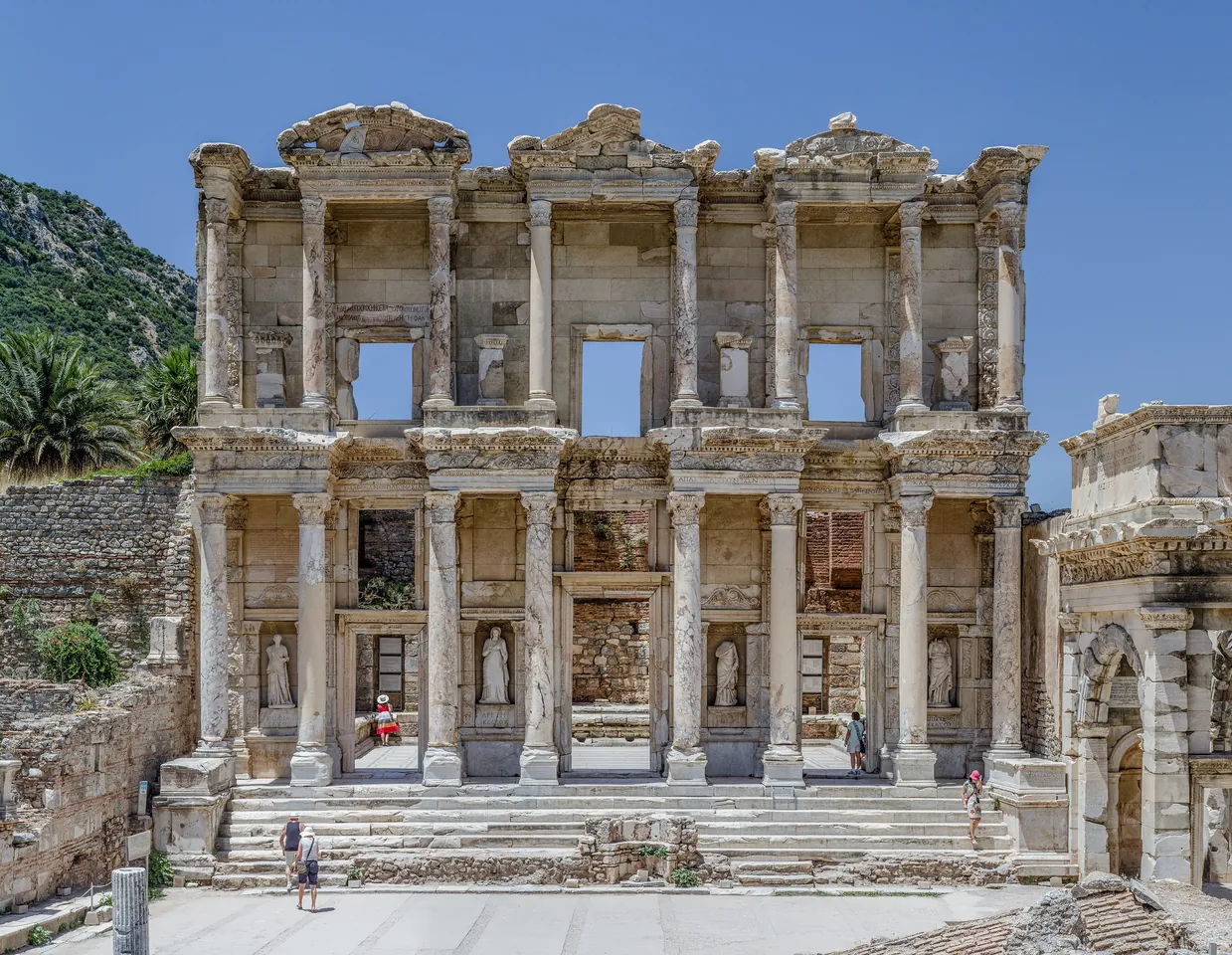
Ephesus is often introduced through one photograph: the Library of Celsus rising at the end of a marble street. The real pleasure of visiting is discovering how much more lies between that familiar façade and the city around it. Gates, fountains, homes, places of assembly and a great theatre sit within a landscape that has changed dramatically since antiquity. This is a place to walk through, rather than a single monument to tick off a list.
For a traveller arriving through Kuşadası, Ephesus is also an unusually rewarding introduction to western Türkiye. The remains are close enough for a focused half day, yet rich enough to justify a slower visit. Guides can build a story around civic life, trade, religion and the everyday choices of residents. Independent visitors can use the same landmarks to give shape to the walk. The aim is to leave with a sense of a functioning city, not just an album of ruins.
Start with the landscape, not the library
UNESCO describes Ephesus as a sequence of settlements whose position followed a retreating coastline. That detail changes the way the site reads. The streets now sit inland, but the city once drew strength from its connection to the sea and the routes that crossed the Aegean. Before entering, take a moment to imagine the distance between today's fields and an ancient harbour. It helps explain why such an elaborate urban centre developed here.
A useful introduction for a group is to separate the wider Ephesus story from the visible Roman city. The World Heritage property reaches beyond the best known streets and includes traces of different periods around modern Selçuk. The famous monuments reveal one especially powerful chapter. They do not represent every era of the area's history. This distinction gives visitors a framework for what they are about to see and stops the grand façades from flattening the past into one moment.
Follow the public spaces toward the Library of Celsus
The most satisfying route lets the scale of the city unfold gradually. Notice how a street directs the eye, where a doorway suggests a change from public to private space, and how a theatre or square could gather people for different purposes. The marble underfoot and the surviving columns are beautiful, but their arrangement matters more than their number. Allow time to stop at intervals and look back. The perspective often reveals a relationship between buildings that is easy to miss while moving forward.
The Library of Celsus deserves its reputation. Its ornate front makes a strong visual ending to a walk, especially when approached along the main route. Yet it is worth asking what the façade communicates before reaching for the camera: patronage, learning and the wish to be remembered. The building is part of a civic setting, and its impact depends on the surrounding street. A guide can use this point to connect an individual monument to the city's broader ambitions.
Make room for the Terrace Houses
The Terrace Houses bring the visit down to human scale. According to the Turkish museum authority, the complex preserves seven Roman houses associated with affluent residents. Mosaics, wall painting, marble decoration and features such as underfloor heating offer a different view from the city's public monuments. The detail is domestic, but it still speaks about status, craftsmanship and the resources required to maintain a comfortable household.
If your schedule allows, treat this area as a deliberate second chapter rather than an optional afterthought. The contrast between a decorated home and the monumental street outside is one of the strongest teaching moments at Ephesus. Visitors can compare what a city chose to display publicly with what its wealthier residents built around themselves. Check the current admission conditions separately before you arrive; the houses may have their own ticket rules, and prices can change.
Give the Great Theatre its own moment
The Great Theatre is another landmark identified in UNESCO's account of the Roman city. Its scale is best understood by entering the space and pausing rather than simply taking a photograph from the street. Look at the relationship between the seating, the performance area and the route approaching it. A theatre was part of urban life; it was also a statement about a city's capacity to gather people and stage events.
For a guided group, this is a natural place to let visitors look around independently for a few minutes before continuing the explanation. For families, it is an easy place to ask younger travellers to picture the sound and movement of a crowd. Keep the language imaginative while distinguishing what the surviving architecture shows from details that cannot be proved about any particular day in antiquity. That balance makes the story more vivid and more trustworthy.
Plan a comfortable visit from Kuşadası
Kuşadası cruise visitors should work backward from their ship's required return time, not just its published departure. Leave a margin for transport, a slower walk and any change to the day's programme. The site is exposed in places, so shoes with reliable grip, drinking water and sun protection can matter as much as the historical plan. A compact group may move quickly between highlights, but the best conversations often happen when the route allows for pauses.
For independent travellers, arrange transport to the archaeological site rather than assuming that the port and the ancient city are within walking distance. Decide in advance whether the Terrace Houses are a priority, then check the day's opening hours and entry conditions through the relevant official source. Our Ephesus destination guide keeps the practical visitor information together. It is sensible to recheck close to the visit because seasonal schedules, access and fees can change.
Link Ephesus with nearby places thoughtfully
Modern Selçuk offers a useful bridge between the ancient city and the landscape around it. UNESCO notes the wider heritage of the area, including the Temple of Artemis and later Christian sites. These places belong to different periods and should not be squeezed into a single undifferentiated story. If time is short, choose one additional stop that fits the group's interest instead of racing between every name on a map.
The House of the Virgin Mary is another nearby destination often considered by visitors. It is a living place of pilgrimage as well as a stop on tourism routes, so a respectful pace and attention to local visiting arrangements are essential. A guide can explain the site's traditions carefully, making clear where historical evidence and devotional belief serve different purposes. The result is a day with a coherent narrative rather than a hurried sequence of photographs.
A simple route to remember
Think of an Ephesus visit in three movements. First, establish the setting: a city shaped by trade, changing shorelines and many centuries of occupation. Second, walk through the public spaces to the Library of Celsus and the Great Theatre, reading them as parts of urban life. Third, if your time and ticket permit, look inside the Terrace Houses for a more intimate view of Roman domestic culture. This structure works for a guide's narration and for an independent visitor's notes.
The reward is a more generous reading of the site. Ephesus remains spectacular in a photograph, but it becomes memorable when visitors connect a street, a home, a civic building and the surrounding valley. Allow curiosity to set the pace. Check current practical details before leaving, and give yourself enough time to notice the spaces between the famous monuments.